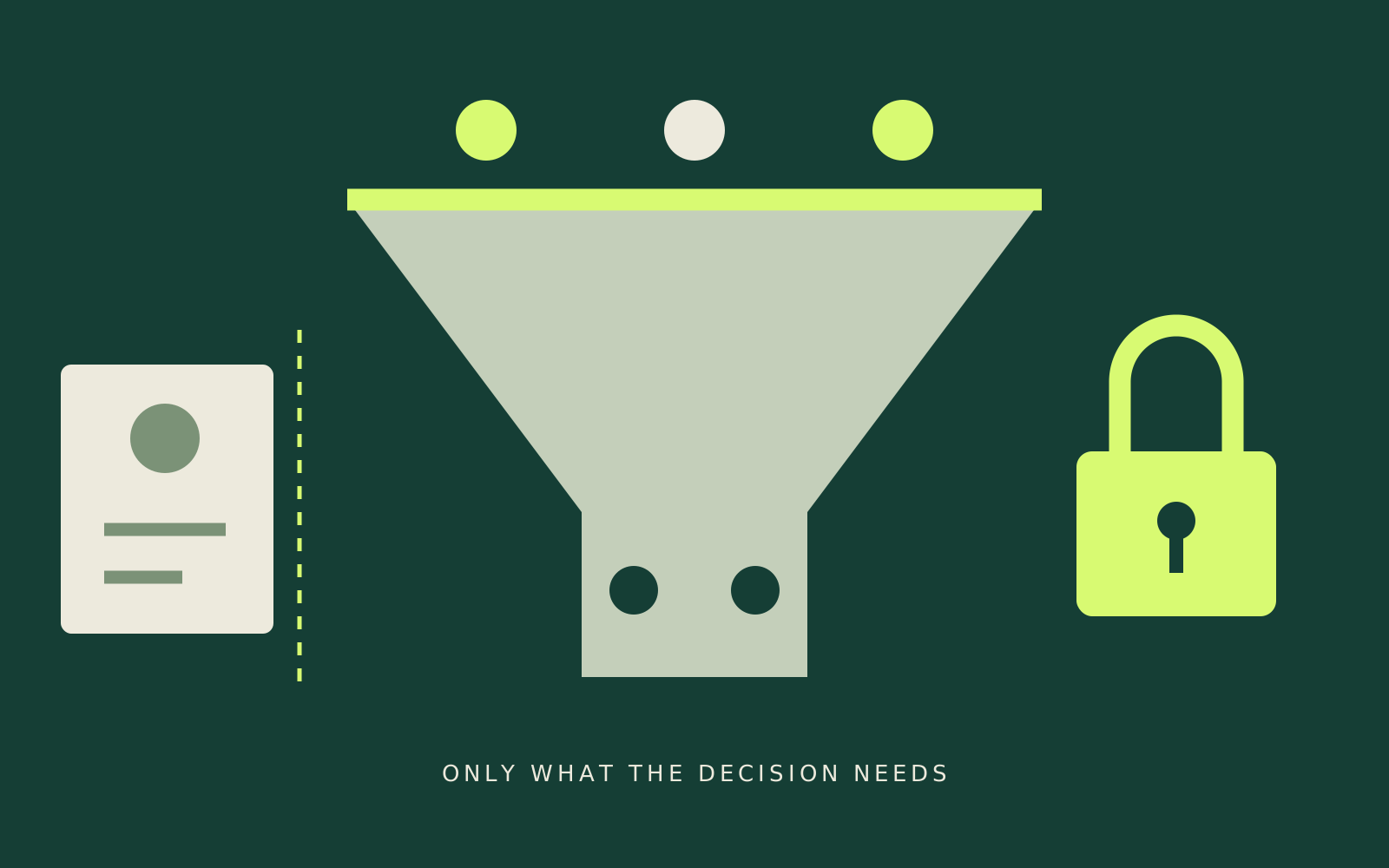
Choose the smallest useful set of events and keep personal identifiers out of analytics URLs and campaign labels.
Write the decision before the event list
Before installing a measurement tag, write the decision the campaign should inform. A sponsor may want to understand which article themes attract relevant attention. An editor may want to know whether readers use a practical worksheet. Neither question automatically requires a visitor's name, phone number or detailed browsing history. This proposed planning approach begins with the smallest useful observation and asks what additional data would change the decision. It is operational guidance, not a statement of legal compliance. Applicable privacy requirements and the selected platform's terms need their own appropriate review.
Separate audience measurement from customer records
Draw a boundary between aggregate audience reporting and the customer records needed to handle an enquiry. A count of completed brief downloads serves a different purpose from a named sales contact. Do not join these datasets merely because the software makes it possible. Write a simple event dictionary with the action, purpose, permitted parameters, destination and access owner. For an illustrative publication, an event might record that a public guide was downloaded, identified by its content code. The brief itself, the visitor's free-text question and contact details do not need to accompany that event.
Make campaign names safe to share
Google Analytics policies prohibit sending information Google recognises as personally identifiable information, and its guidance highlights page URLs, titles and campaign parameters as potential leakage routes. Use descriptive campaign codes rather than a person's name or email address. A label such as industry-brief-q1 describes the campaign without identifying the recipient. Inspect generated links before distribution, including links created by a CRM or email platform. A campaign can be well organised without putting customer identifiers into every address. Treat a human-readable naming convention as part of the measurement design, not an afterthought.
Inspect the payload, not just the dashboard
A dashboard can look clean while the underlying collection includes unnecessary information. Before launch, test the actual information sent by tags and events using appropriate developer tools and controlled test inputs. Include a deliberately unusual search phrase and form example so that accidental collection is easier to identify. Never use real customer secrets for testing. Google's redaction features can reduce certain accidental collection, but they should not replace a deliberate data design. Document the test, the fields observed and the corrective change. Repeat relevant checks when a form, URL structure or integration changes.
Give the data an owner and an expiry question
Assign a person to approve the event dictionary and review access. Ask why each dataset is retained, who uses it and whether an older level of detail still serves the stated purpose. Choose retention settings only after understanding the business and applicable requirements; this article does not prescribe a universal retention period. Keep raw exports out of casually shared presentation folders. When a sponsor receives a report, provide the agreed aggregate evidence and explain its limitations. A commercial relationship does not, by itself, justify transferring a reader list or identifying an individual visitor.
Report what the evidence can support
A useful campaign report can remain modest: the period observed, the eligible pages, the measured events, the comparison method and the decisions that follow. Explain missing information, including where consent choices, configuration or coverage limit interpretation. Do not relabel an aggregate download count as qualified leads without a defined qualification process. Keep hypotheses separate from observed outcomes, and avoid treating a correlation as proof that the campaign caused revenue. The discipline is valuable even for a small website: collect deliberately, inspect what actually travels and report only what the evidence supports.
Sources & context
Official references checked 29 October 2026. Linked sources support the attributed statements; the working method is NUMU’s editorial synthesis.مراجع رسمية تم التحقق منها في ٢٩ أكتوبر ٢٠٢٦. تدعم المصادر العبارات المنسوبة إليها، أما المنهج العملي فهو معالجة تحريرية من نمو.