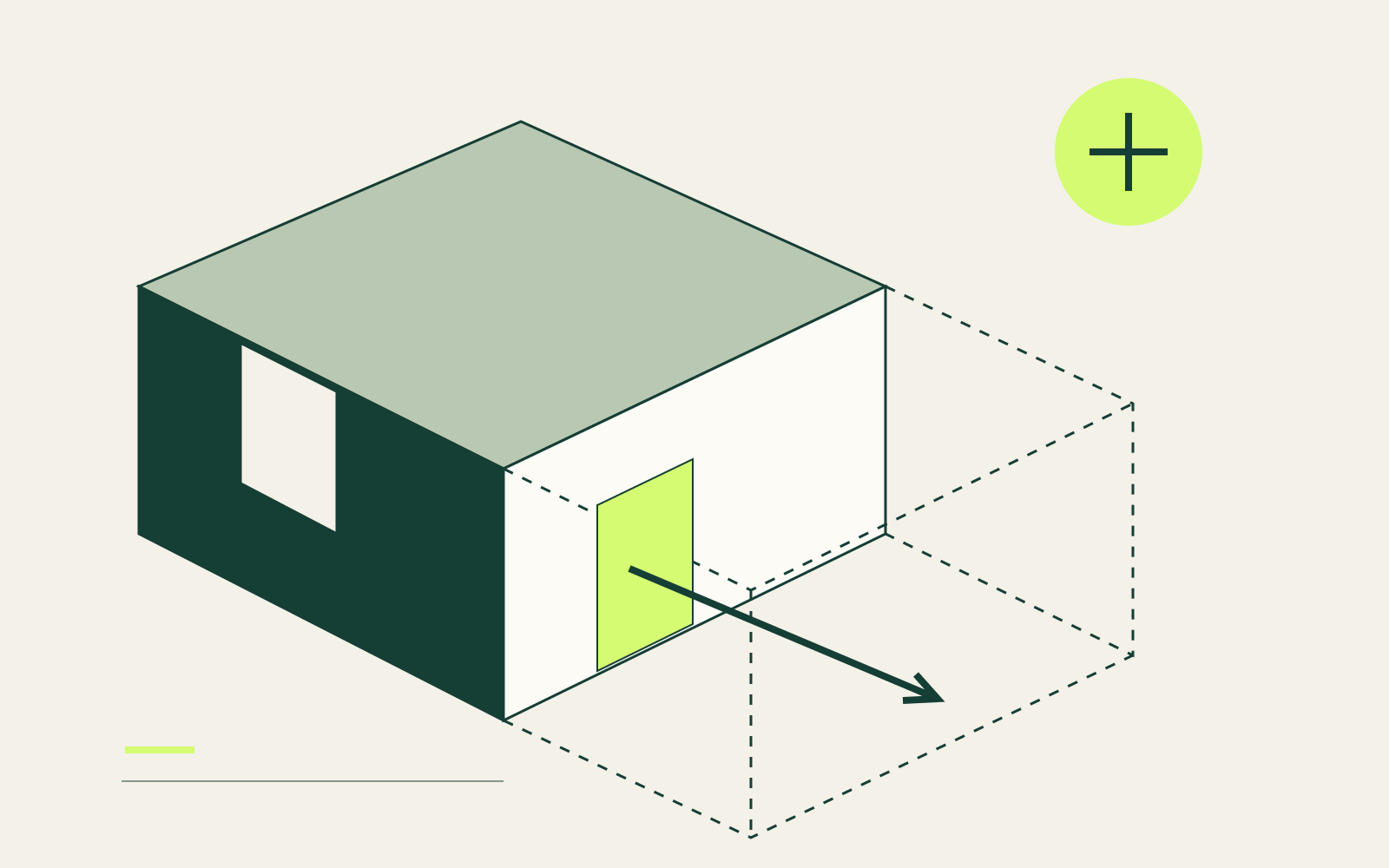
Expansion readiness begins with documented assumptions and professional review, not an unverified promise of spare capacity.
Describe two operating scenarios
A new industrial tenant understandably wants to begin operating quickly. The risk is that an early layout decision makes the next stage unnecessarily difficult. Prepare a brief with two operating scenarios: the initial activity and a plausible expansion case. Describe products, working patterns, material movements, equipment intentions and customer requirements in each. Label the second scenario as an assumption, not a forecast or an approved expansion. The exercise gives designers, the landlord and the operating team a common set of questions. It does not establish that another production line or a change of use is permitted.
Make the flow visible
Sketch the sequence of receiving, holding, preparation, production, inspection, finished goods and dispatch. Add people, maintenance access, waste handling and visiting vehicles as separate flows. Identify where a future change would cross an existing route or consume an area already needed for another purpose. The HSE’s traffic-route guidance provides general questions about destinations, hazards, surfaces and loads. Use those questions to prepare a discussion with qualified local professionals. Do not copy foreign dimensional rules into an Oman project or treat a sketch as a safety assessment or construction drawing.
Separate confirmed capacity from aspiration
Create an assumptions register for utilities, structural requirements, equipment interfaces and operational permissions. Give every item a status: confirmed in an identified document, being checked by a named professional, or only a tenant assumption. Record the scope and date of each confirmation. “There is spare power” is not a usable instruction without a responsible party and an agreed basis. Likewise, empty floor space does not establish adequate structural capacity or an acceptable evacuation arrangement. Ask the relevant engineers, operator and authorities to determine the actual requirements through their normal design and approval processes.
Ask what a future change would disturb
For each major fit-out decision, ask what would have to move if the expansion scenario became real. Consider the impact on operations, access for installation, downtime, reinstatement and the ability to maintain existing equipment. A proposed removable partition may offer flexibility, but its suitability depends on the complete design and required approvals. Compare an initial arrangement with an alternative through an agreed cost and disruption assessment rather than assuming that “future-proof” always means spending more now. Keep the decision focused on a credible next stage instead of paying for every imaginable future activity.
Define interfaces and handover evidence
Draw a responsibility map covering the landlord’s shell, tenant works, equipment supplier, utility interfaces and ongoing maintenance. Ask each party to identify the evidence it will hand over: approved drawings where applicable, test or commissioning records, operating information and the final record of what was installed. Confirm who receives and maintains these documents. A commercial responsibility map helps the conversation, but it is not a substitute for reviewed contracts or professional appointment scopes. Resolve gaps before the work becomes difficult to inspect, and make change requests visible to the people who must approve them.
Preserve a decision record for the next team
At handover, keep the final layout, confirmed assumptions, unresolved items and change history together. Record the business reason behind choices that may look arbitrary to a future manager. When expansion is considered, reopen the register and obtain fresh confirmation rather than treating the original discussion as permanent permission. Evaluate the move against actual operating demand and the cost of disruption. The useful outcome is a unit that can be understood and assessed for change. It is not an assurance that growth will be cheap, automatic or free from new design and approval requirements.
Sources & context
Official references checked 29 October 2026. Linked sources support the attributed statements; the working method is NUMU’s editorial synthesis.مراجع رسمية تم التحقق منها في ٢٩ أكتوبر ٢٠٢٦. تدعم المصادر العبارات المنسوبة إليها، أما المنهج العملي فهو معالجة تحريرية من نمو.